.avif)

Dependency Injection in Angular 12, an Overview - Part 1
How dependency injection works in Angular: what the injector does when modules depend on each other, and why it beats importing directly.
In Angular project it is often required for parts of the App to communicate with the other modules in the App. In such cases we simply import the external module to the dependent class. For instance if a module One is imported inside the module Two then we can say that module Two is dependent on module One.
Basically, what Dependency Injection does is it makes parts of the app accessible to the other parts of the program. This also means that you don’t have to use the new keyword every time you create a class instance. If you are wondering that how it is convenient not to use the new keyword. Well just think that you have created and used instances of your class in let’s say 50 times in your projects in different places and now it has become absolutely necessary to add some new properties into your class definitions. As a result you not only had to update the class definition but also had to make changes to all those 50 places and also may be to all their dependencies.
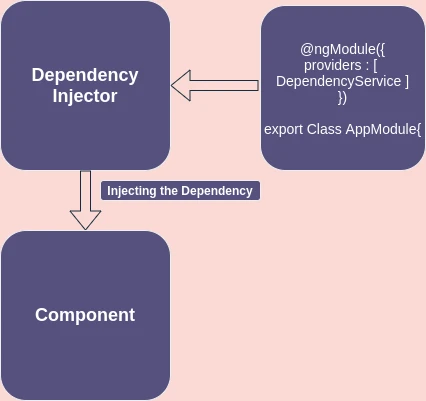
The Dependency Injection in Angular is handled by the Angular Dependency Injector. What an injector basically does, it creates and Injects the Service we want to use across the Application. What you can see in the diagram is, a service is required to be injected to the Component. The injection is accomplished by registering the Service into the App Module Provider Object. As a result, the service can be used into the Component where we want to use to the service.
It is worth noting that Dependency injection is a Design Principal which is used in many different frameworks, not only in Angular
The key benefit of using Dependency Injection is, the dependent components don’t need to know how to Create the Dependency or to create the instances of it. All the components have to be concerned is to how to interact with that dependency.
Stay tuned for the next part of the discussion on Dependency Injection. There are a lot more to cover in this Topic.
Need this inside a real product? ARITS does front-end and web platform work.